Waking Up Before Your Alarm: Practical Reasons and What to Try
A calm guide to why you might wake up earlier than planned-even after a solid night-and simple changes that can help you sleep until your alarm.
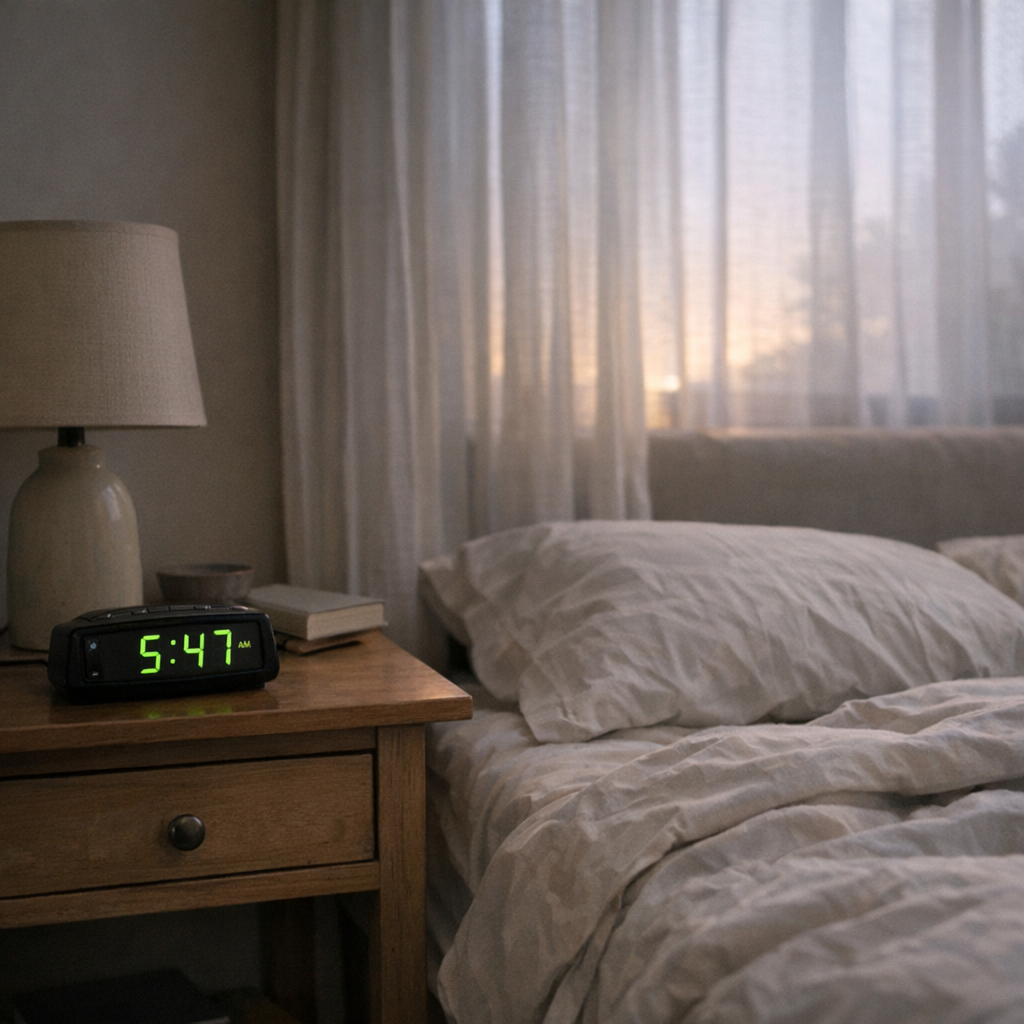
Author: Recovery Club
If you keep waking up before your alarm, it can feel confusing - especially when you went to bed on time and the night seemed “fine.” The good news is there are a few very normal patterns that can explain it. Below is a simple mental model and a handful of low-effort things you can try.
A simple mental model: two systems are at play
Most early wake-ups come from a mix of:
- Sleep pressure - how much your body “needs” sleep (builds up while you’re awake).
- Body clock (circadian rhythm) - your internal schedule that nudges you toward sleep and wake times, influenced by light, routine, and timing.
If your body clock starts pushing “wake up” earlier than you want, you may pop awake even if you technically could sleep longer.
Common, practical reasons you wake up early
1) Your body clock has shifted earlier
This can happen after a few days of waking early, a new schedule, travel, or a streak of bright morning light. Once your brain learns “this is wake time,” it may keep doing it.
What it looks like: you wake at roughly the same early time, even on weekends.
2) Light is getting to you earlier than you think
Early sunlight, streetlights, or a phone screen can signal “morning” to your brain.
What it looks like: waking right around dawn, or after a brief glance at your phone.
3) Stress, anticipation, or a mental to-do list
You can have a decent night and still wake early if your mind is on alert about the day. This is common before big meetings, travel, early workouts, or anything you care about.
What it looks like: waking with thoughts like “I should be up” or mentally planning.
4) Sleep timing is a bit off (too much time in bed)
If you’re spending more time in bed than you currently need, your sleep may naturally end earlier. This can be extra noticeable if you’ve recently improved your sleep habits or had a few good nights.
What it looks like: you fall asleep quickly, but wake up early and feel “mostly okay,” just annoyed.
5) Alcohol, late meals, or dehydration
Even if you fall asleep easily, alcohol can make sleep lighter later in the night. Heavy or late meals can also disrupt the second half of sleep.
What it looks like: early waking plus lighter, more fragmented sleep after 3-5 a.m.
6) Temperature, noise, or partner/pet movement
Sleep is often lighter toward morning, so small disruptions matter more.
What it looks like: waking when heating kicks on, trash trucks roll by, or someone shifts in bed.
7) Caffeine timing
Caffeine can linger longer than people expect, especially if you’re sensitive.
What it looks like: early wake-ups after afternoon coffee or energy drinks.
What to try (small changes, low pressure)
You don’t need to do everything. Pick one or two experiments for a week.
A) Keep your wake time steady, and make it boring
If you wake early, try to avoid “training” your brain that early wake time = start the day.
- Keep lights low if it’s before your planned wake time.
- Skip the phone check if you can. Even a quick look can cue alertness.
- If you’re awake longer than feels comfortable, you can try a quiet, low-light activity (like reading a few pages of something calm) and return to bed when sleepy.
B) Reduce early-morning light
- Try blackout curtains or an eye mask.
- Cover or dim bright LEDs in the room.
- If you wake near dawn, this alone can sometimes make mornings less “jolty.”
C) Give your brain a place to put the to-do list
- Do a quick 5-minute “tomorrow list” earlier in the evening: top 3 tasks, any worries, and the first tiny step.
- If you wake with thoughts, you can keep a notepad nearby and write one line, then let it go.
D) Check your evening timing
A few gentle knobs to turn:
- Aim for a consistent wind-down (even 15-30 minutes).
- If you suspect late meals are a factor, you can try finishing heavier food earlier and keeping late snacks light.
- If alcohol seems connected, you can experiment with less, earlier, or none and see what changes.
E) Adjust caffeine and liquids as an experiment
- Try moving caffeine earlier in the day for a week.
- If bathroom trips are waking you, experiment with front-loading water earlier and tapering late evening.
F) Make the sleep environment more stable toward morning
- Consider a white noise option if sound wakes you.
- If you run hot or cold near morning, try small changes like lighter bedding or a slightly cooler room.
If you wake early, what should you do in the moment?
A simple approach:
- Check in: are you truly awake, or lightly awake?
- Keep it low-stimulation: dim light, no scrolling.
- Give it a little time: sometimes sleep returns on its own.
- If you’re awake and frustrated, do a calm activity in low light and come back when sleepy.
The goal is to make early waking feel unimportant, not like a problem to solve at 4:45 a.m.
When it’s worth getting extra support
If early waking is frequent and is affecting your day, or comes with other concerns you’re not sure about, it may help to talk with a qualified professional who can look at the bigger picture.
A quick way to track patterns (optional)
For 7 days, jot down:
- bedtime and estimated sleep time
- wake time (including early wake)
- caffeine and alcohol timing
- light exposure (bright morning light, screens late)
Patterns usually show up faster than you’d think, and that makes your next experiment clearer.
Read also
- Caffeine and sleep - how many hours before sleep should you drink your last coffee
- Waking Up at Night and Can’t Fall Back Asleep: What Sleep Fragmentation Often Means
- Why is it hard to get up in the morning, even after a good sleep?
- I wake up at night and cannot fall back asleep (short) | Recovery Club
- I wake up at 3-4 am and cannot fall back asleep
- Why has it become harder even on calm days
Related situations
More to read
- AnswerWhy most people don’t need exact macros | Recovery Club
- AnswerSteps and training in calorie context | Recovery Club
- AnswerWeight goes up on rest days — what it means | Recovery Club
- AnswerHow to tell if recovery is OK | Recovery Club
- AnswerOne range vs split days | Recovery Club
- AnswerHow often to adjust calories | Recovery Club
- AnswerWhy hunger rises after training | Recovery Club
- AnswerThere is a deficit but no trend — what to do | Recovery Club
- GuideWhy calories and macros fail without training and recovery context10 min
- QuestionI keep a deficit but weight doesn’t move — why?
- QuestionDo very precise macros make sense?
- QuestionHow do I know I’ve recovered?
- QuestionHow should I account for steps and training together?
- QuestionCan I keep the same calorie level every day?
- QuestionWhy does weight go up on rest days?
- QuestionWhy am I hungrier after training even with the same calories?
- QuestionHow often should I change calories?
- QuestionWhat WHOOP Really Measures (and Who It’s Best For)
- AnswerWHOOP Readiness & Recovery: What It Measures (and Key Limits)
- AnswerWHOOP Strain, Sleep & Recovery: What It Gets Right vs Wrong
- GuideWhat WHOOP Measures: Sleep, Recovery, Strain & Stress6 min
- QuestionHow to ease back into your routine after a long break (48-72 hours)
- AnswerBacklog Shock: Why Unread Messages Drain Motivation
- GuideGetting Back Into Routine After a Vacation or Long Weekend5 min
- AnswerWhy Your First Day Back at Work Feels Like Jet Lag (No Travel Needed)
- QuestionWhy do I wake up before my alarm even after good sleep?
- AnswerStress and Anticipation Can Trigger an Early Wake-Up
- AnswerYour Body Clock Is Running Ahead of Your Schedule
- AnswerWhat to do if you feel drained and irritated after the weekend
- AnswerWhy your tracker shows low recovery on Monday
Prepared by the Recovery Club editorial team.
This is not medical advice. We use tracker data, research, and editorial experience, but we do not make personal recommendations.
Describe your situation in Ask - it will suggest materials by topic.
Open Ask